
The Wage Anchor: What Ghana’s Pay Deal Reveals About Its Fiscal Policy
 A two-year settlement shows that fiscal discipline and labour peace can reinforce each other
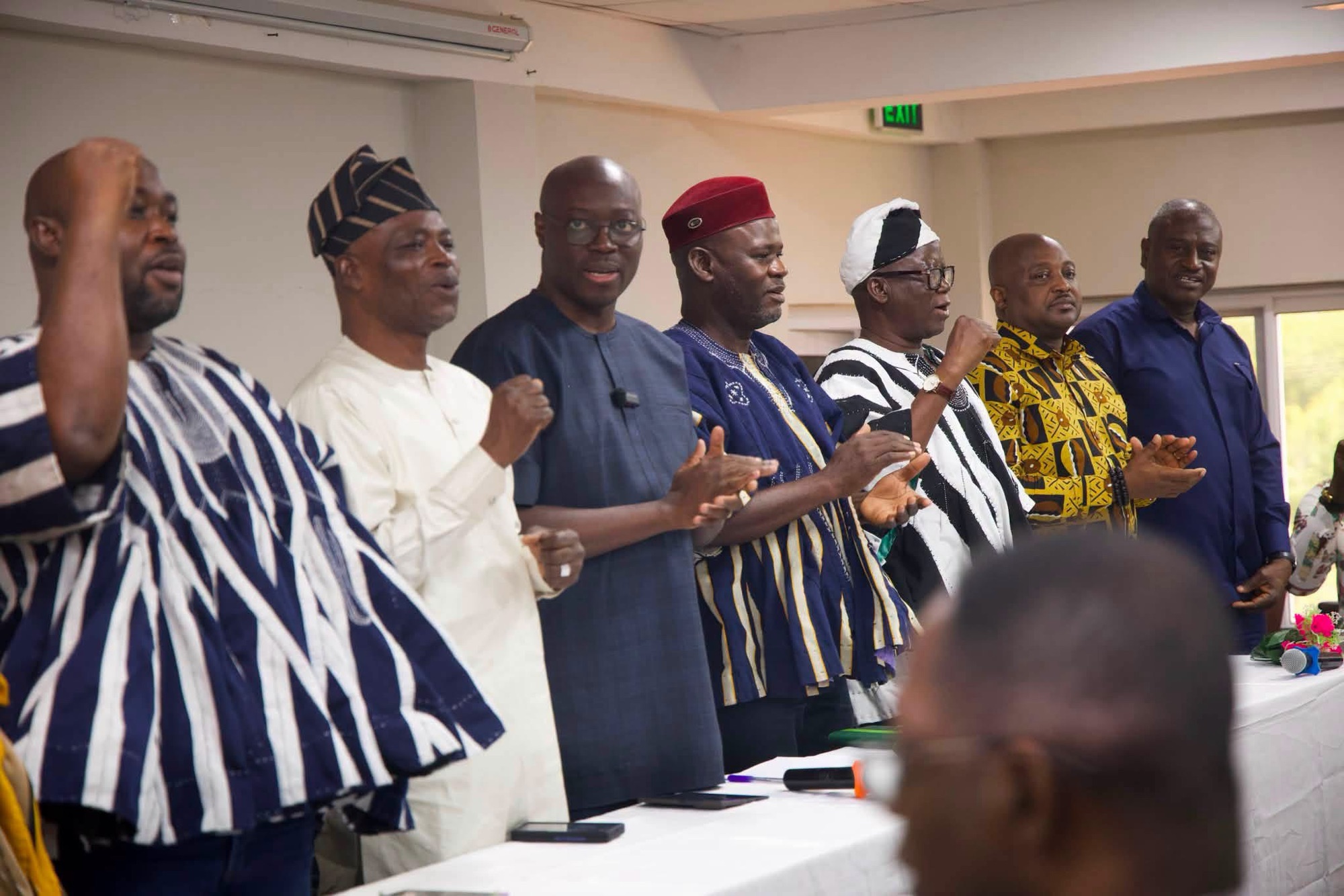
Every government that adjusts hard in year one faces the same test in year two. Unions remember who held the line, and the bargaining table is where memory turns into demands. The Finance Minister reached that moment on 28 October, when his ministry, with the Fair Wages and Salaries Commission, signed a two-year remuneration agreement with Organised Labour. The agreement is worth reading as a piece of economic design, because it shows how the minister intends to govern now that stabilisation is done.
The terms
The agreement runs from 1 January 2027 to 31 December 2028. For 2027, total remuneration rises 9%: 8 points for across-the-board base pay and 1 point for conditions of service. For 2028, base pay rises a further 10%, calculated on base pay at the end of 2027. The text records that the 2028 figure was set against inflation of 5.2% and the government’s projection of 8%, plus or minus 2 points, for both years. One clause allows a review of 2028 base pay if December 2027 inflation overshoots that 8% mid-point “by a factor of two.”
A framework: credible commitment, priced risk, institutional durability
Economists have long known that governments cannot simply announce discipline and be believed. The problem, formalised by Kydland and Prescott, is that a policy promised today is tempting to abandon tomorrow, and everyone, including workers and creditors, prices that temptation in. The cure is a commitment that is costly to reverse. I propose three tests for judging whether a wage settlement supplies one.
Test one: is the commitment credible? A credible wage deal ties pay to a published forecast rather than to bargaining power. This one does. The government wrote its inflation projection into the signed text and priced the 2028 rise against it. That does two things. It tells unions what the state expects, which anchors their own expectations. And it exposes the government to being held to its number. Few finance ministers invite that exposure, and it reflects the same instinct that produced the statutory fiscal rule: a primary surplus of at least 1.5% of GDP and debt at 45% of GDP by 2034, bound by Parliament and not by promise.
Test two: is the risk priced and allocated sensibly? Here the deal’s design shows its sophistication. Open-ended indexation clauses turn every inflation surprise into a reopening of the settlement and push expectations upward. This agreement avoids that. The review trigger is narrow: one variable, one month, one year’s pay. Labour gets insurance against a genuine spike, and the Ministry keeps the wage bill predictable. The arithmetic shows how it plays out. Real pay change equals one plus the nominal rise, divided by one plus inflation:
| Inflation (both years) | 2027 real base pay | 2028 real base pay | Two-year real change |
|---|---|---|---|
| 5.2% (today’s rate) | +2.7% | +4.6% | +7.3% |
| 8% (government mid-point) | 0.0% | +1.9% | +1.9% |
| 10% (top of government band) | −1.8% | 0.0% | −1.8% |
These figures are my own calculation from the agreed rates, not the government’s. They show a deal that is well-balanced. At the government’s own forecast, workers hold their ground in 2027 and gain in 2028. If inflation stays near its current level, as the recent trend suggests, they gain materially. Inflation was 5.2% in September. And if the forecast fails badly, the trigger clause exists. A settlement that protects workers in the central case and in the benign case, while capping the state’s exposure, is a well-built one.
Test three: is the arrangement institutionally durable? The agreement says it is meant to give predictability during the transition from the Fair Wages and Salaries Commission to the Independent Public Emoluments Commission, and it commits the parties to review allowances before that handover. This is quietly ambitious. Ghana’s public pay system has long carried distortions in allowances that make headline pay rises less meaningful than they look. The 1-point provision for conditions of service, which the TUC says is aimed at inequalities in allowances, with attention to lower-paid and vulnerable workers, begins repairing that. Settling base pay for two years while reforming the structure underneath it is the kind of sequencing that separates a reform government from a merely cautious one.
What the settlement says about the minister’s method
Part 1 argued that Dr.Forson’s distinguishing choice was to bind himself first and ask for patience second. This agreement extends the pattern into a new arena. He did not buy peace with a headline number the state cannot afford, and he did not hold out for a freeze that would have cost the government its credibility with workers. He found the narrow path between the two: a modest, forecast-based settlement, a bounded backstop, and a structural reform agenda attached.
It also fits the sequencing logic of his recovery. The macro foundation came first: debt fell from 61.8% of GDP at the end of 2024 to 45.0% in June 2026, and inflation dropped from 13.7% in June 2025 to 5.3% a year later. That lower inflation is precisely what makes a two-year deal possible at all. A government facing 13% inflation could not have signed a fixed two-year pay framework without courting either a real-wage collapse or a wage-price spiral. The stabilisation created the room for this settlement, and this settlement now locks in part of the gain. It is a reinforcing loop, and a rare one.
I should be careful about attribution. The agreement names the Ministry of Finance and the Commission as the government parties, and I have seen no reporting on the minister’s personal role in the talks. But the design reflects the same discipline his record shows, and a finance minister owns the fiscal consequences of any settlement signed in his ministry’s name.
The tests that remain
The same framework identifies where the settlement will be proved. The cost to the wage bill has not been published, and the 2027 budget statement is the natural place to show how the deal fits the 1.5% surplus rule. The government’s own inflation band reaches 10%, and Fitch expects inflation to drift toward 9% by year-end. That is inside the band but closer to its edge than today’s reading. And a GH¢30 billion bond matures in February 2027, with the sinking fund at GH¢15.6 billion in July, so the fiscal calendar is busy. None of these undermines the settlement, but together they define the standard against which the minister will be judged. His record gives reason to expect he will meet it.
The verdict
The finance minister’s central claim is that credibility, once built, pays dividends. This agreement is the clearest early evidence. Unions accepted a deal priced against the government’s own forecast. The government accepted a narrow trigger instead of open-ended indexation. Both sides wrote their assumptions into a signed text and attached a structural reform to it. That is how fiscal institutions are built.
If inflation stays near 5% and the 2027 budget funds the deal inside the surplus rule, Dr.Forson will have shown that stabilisation and labour peace are not rivals but partners. The budget week of November will begin to show whether he can extend the same discipline into a budget for growth.